
The Short Answer
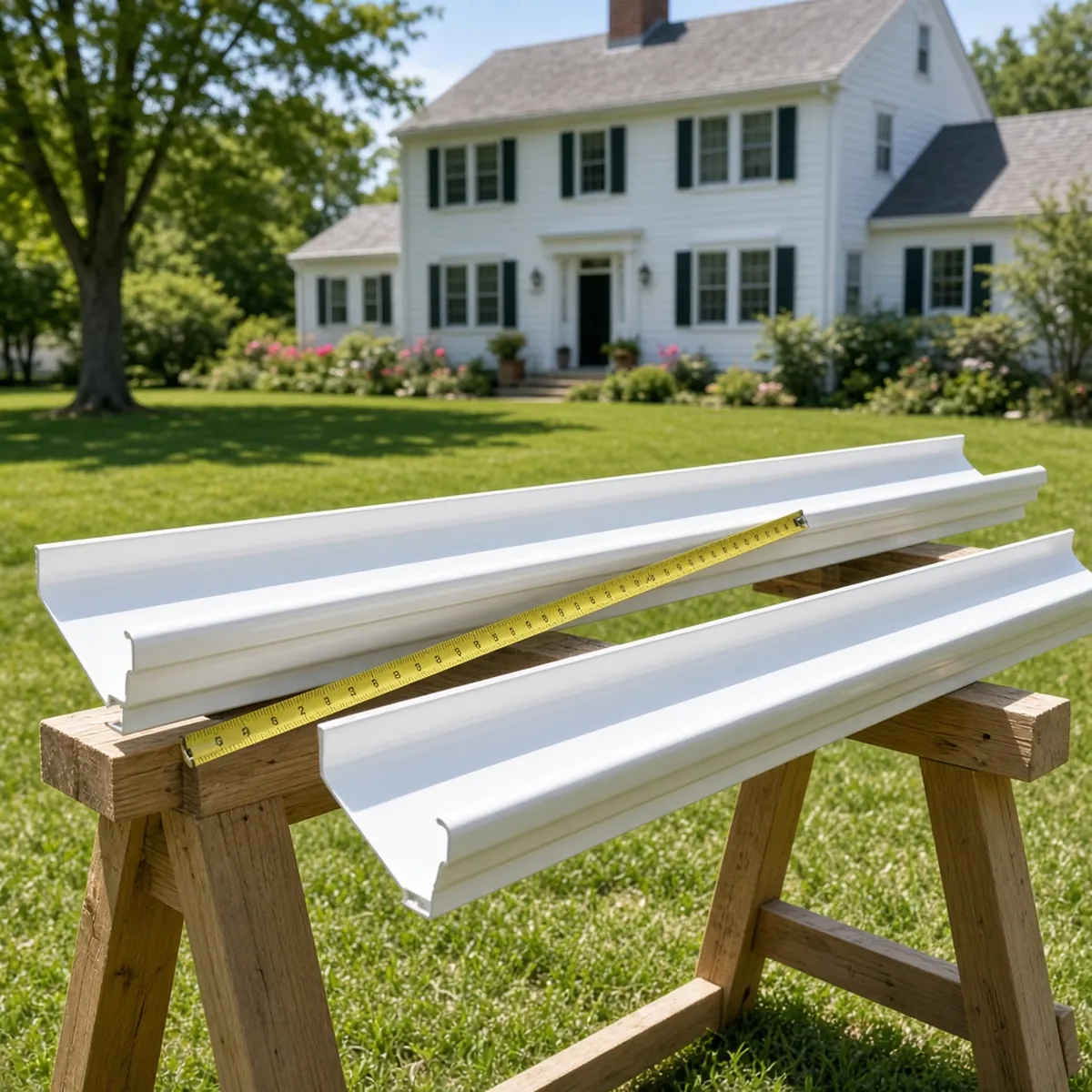
Five-inch gutters suit a standard roof with moderate pitch and normal roof area. Six-inch gutters suit a large roof, a steep roof that dumps water fast, or a roof with long runs feeding few downspouts. Six-inch trough holds about 40 percent more water and pairs with wider 3x4-inch downspouts, so it clears heavy flow without overflowing. On many Plainville homes a mix works — six-inch on the big front slope, five-inch on smaller runs.
Why Roof Size and Pitch Decide Gutter Size
Roof size and pitch decide gutter size because they set how much water arrives at the trough and how quickly. A large roof collects more rain and snowmelt, and a steep roof delivers it to the edge faster, so both push more water into the gutter in a short burst. A trough that is too small overflows at the front edge during a downpour or a fast thaw, no matter how clean it is.
Pitch also affects the gutter's own fall. A long five-inch run with a single downspout backs up at the far end; the same run in six-inch trough with a downspout at each end clears far more water. Matching the trough size and the downspout count to the roof is what stops the overflow.
How Snow and Ice Change the Math in Plainville
Snow and ice change the gutter math in Plainville because the water does not arrive all at once. The Bradley station averages 48 inches of snow a year, and that snow melts and refreezes in cycles through the winter. Meltwater runs to the cold roof edge, and a trough that is undersized or holding ice backs the water up until it finds a way behind the gutter. Six-inch trough gives the meltwater more room and more time to reach the downspouts before it refreezes.
Five-Inch vs Six-Inch at a Glance
| Factor | 5-inch K-style | 6-inch K-style |
|---|---|---|
| Water capacity | Standard | ~40% more |
| Downspout pairing | 2x3-inch | 3x4-inch |
| Best for | Standard roof, moderate pitch | Large or steep roof, long runs |
| Clog resistance | Good | Better (wider outlet) |
| Typical use in Plainville | Most homes, smaller runs | Big front slopes, steep roofs |
When to Go With Six-Inch
Go with six-inch trough when the roof is large, steep, or has long runs that feed few downspouts, and when a roof sheds a lot of fast snowmelt. If your five-inch gutters overflow in heavy rain or during a thaw even right after cleaning, the trough is undersized for the roof, and stepping up to six-inch with wider downspouts is the fix. An installer sizes it to the roof area draining to each corner. For how the downspouts pair with trough size, see downspout installation.
Frequently Asked Questions
Six-inch gutters are worth it on a large or steep roof, or any roof where five-inch trough overflows in heavy rain or a fast thaw. They hold about 40 percent more water and use wider 3x4-inch downspouts that clear debris and flow better. On a standard roof with moderate pitch, five-inch trough is enough, so the upgrade pays off specifically where the roof sheds a lot of water quickly, which is common on Plainville's bigger homes.
Five-inch K-style is the standard gutter size on most houses, including the majority of Plainville homes. It handles a normal roof area and moderate pitch. Six-inch trough is the step up for large roofs, steep roofs, and long runs, and it is common on bigger or newer homes. Many houses end up with a mix — larger trough on the main slope and standard trough on smaller runs.
You can mix five-inch and six-inch gutters on one house, and it is a normal approach. The big front or rear slope that sheds the most water gets six-inch trough, while shorter runs over a porch or small roof section stay five-inch. Sizing each run to the roof area draining to it, rather than putting one size everywhere, is how an installer keeps every section from overflowing without over-building the small ones.
Bigger gutters clog less because six-inch trough pairs with a 3x4-inch downspout outlet that is wider than the 2x3-inch outlet on five-inch gutters. The wider outlet lets more leaves and grit pass through instead of jamming at the drop. The trough itself also holds more debris before it blocks water flow. On Plainville's wooded lots, pairing six-inch trough with gutter guards keeps the system clearest.
Call a Local Gutter Installer in Plainville
If your gutters overflow every heavy rain, the trough is likely undersized for the roof. Call 123-456-7890 to reach a local gutter installer, or see how the full system goes in with gutter installation in Plainville.